The Control Trap: How Micromanagement Quietly Destroys the Capability It Claims to Protect
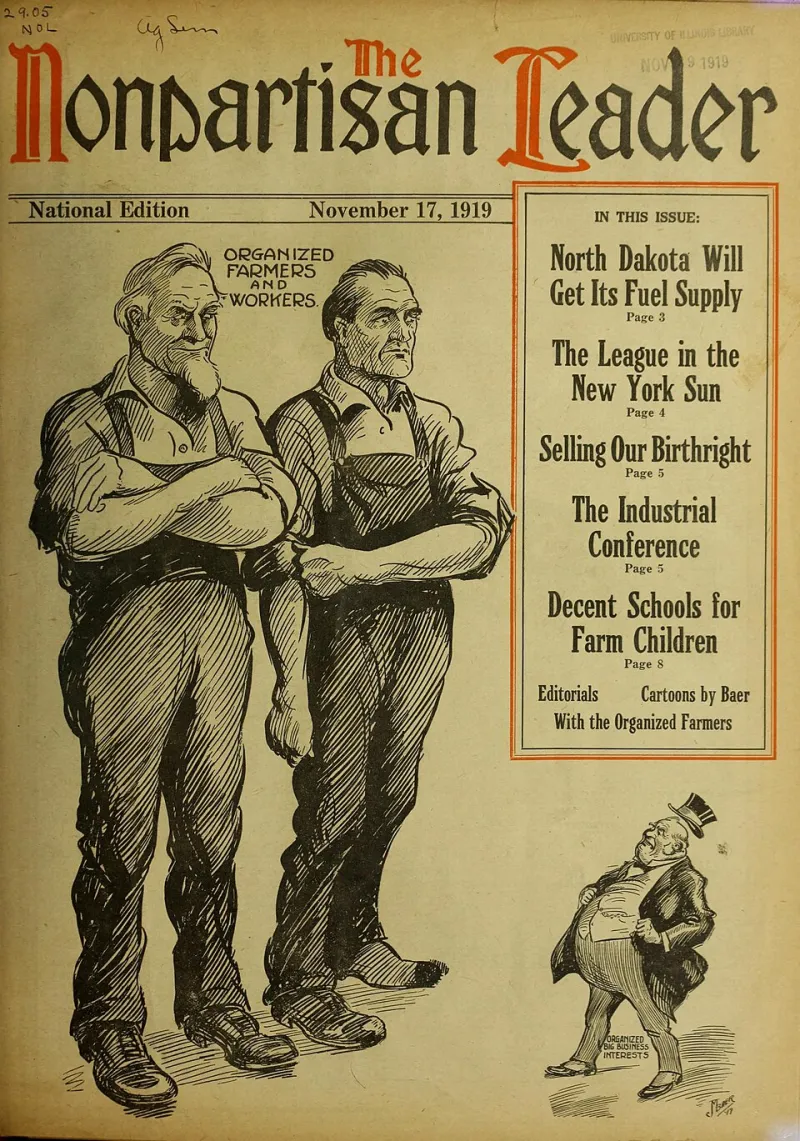
Photo: John Miller Baer, Public domain, via Wikimedia Commons
Most micromanagers do not believe they are micromanagers. They believe they are thorough. They believe they are accountable. They believe they are simply ensuring that important work gets done correctly. And in many cases, they are right that the work matters—but profoundly wrong about what their involvement is actually accomplishing.
This is the central paradox of tight-control leadership: the very behavior designed to guarantee quality outcomes systematically undermines the conditions that produce them. Understanding why requires looking not just at organizational dynamics, but at the psychology driving the behavior in the first place.
Where the Impulse to Control Actually Comes From
Leaders rarely micromanage because they enjoy it. More often, the behavior is rooted in a specific kind of professional scar tissue—memories of a missed deadline, a client who walked, a product launch that stumbled because someone on the team made an undisclosed decision. The nervous system remembers. And so, when a similar situation arises, the instinct is to stay closer, review more, and approve earlier.
This is not irrationality. It is pattern recognition applied in the wrong context. The failure that taught the lesson may have occurred with a different team, under different circumstances, or during a period when the leader genuinely was the most capable person in the room. But the lesson gets overgeneralized, and the result is a leadership posture calibrated for a past environment rather than the present one.
Unclear role definition compounds the problem considerably. When leaders have not explicitly articulated where their authority ends and their team's authority begins, ambiguity becomes an invitation for intervention. Every gray area becomes a potential gap, and gaps are where control-oriented leaders instinctively insert themselves. The more undefined the boundaries, the more justification exists for hovering.
Fear-driven decision-making adds another layer. In organizations where visible mistakes carry significant career risk—or where senior leadership has historically responded to errors with punishment rather than learning—middle and senior managers often default to control as a form of self-protection. If they approved it, they cannot be blindsided by it. This is rational behavior inside a dysfunctional system.
The Self-Fulfilling Prophecy
Here is where the paradox deepens into something genuinely damaging. When leaders hold their teams to tight review cycles, second-guess completed work, and insert themselves into execution decisions, something predictable happens: team members stop exercising independent judgment. Why develop a recommendation thoroughly when it will be reworked anyway? Why take ownership of a decision when the decision will be revisited upward?
Over time, this dynamic produces exactly the outcome the micromanager feared. The team does begin to underperform relative to its potential—not because of inherent incapability, but because the organizational environment has systematically discouraged the exercise of capability. The leader observes this, interprets it as confirmation that close oversight is necessary, and tightens control further.
This cycle is not hypothetical. Research on psychological safety consistently demonstrates that teams operating under high-surveillance management produce fewer creative solutions, surface fewer problems early, and exhibit lower retention rates among high performers—who, almost by definition, have the most options available to them and the least tolerance for having their judgment perpetually second-guessed.
The most capable people leave first. What remains is a team that has, through no fault of its own, been shaped by the very environment the leader created.
Breaking the Cycle: A Framework for Structured Trust-Building
The answer is not simply to let go all at once. Abrupt disengagement after a long period of tight control creates a different problem—teams that have been conditioned to wait for direction are not instantly equipped to operate with full autonomy. The transition requires structure.
Start with explicit role boundaries. Before delegating a task or project, spend time articulating precisely where decision-making authority sits. What can the team member decide independently? What requires notification after the fact? What genuinely warrants escalation before acting? Writing this down matters. Spoken agreements about delegation have a tendency to evaporate under pressure.
Distinguish between progress visibility and approval checkpoints. Leaders who micromanage often conflate staying informed with staying in control. These are different things. A well-designed update cadence—brief, structured, and focused on key indicators rather than granular activity—provides the visibility that addresses legitimate oversight needs without requiring the leader to become a decision bottleneck.
Build trust incrementally and document what works. Assign a defined project with clear success criteria and appropriate authority. When the team delivers, acknowledge it explicitly and internally note the evidence. This matters because the micromanager's instinct will be to discount individual successes as exceptions. Deliberately accumulating evidence of team capability helps recalibrate the mental model driving the control behavior.
Examine the organizational incentives. If the broader culture punishes visible mistakes more than it rewards capable delegation, individual behavior change will be difficult to sustain. Leaders who want to shift their own management style should also ask whether the environment around them is making that shift viable—and, if they have the standing to do so, advocate for norms that reward appropriate risk tolerance.
The Capability That Was There All Along
One of the more striking patterns in organizations that successfully transition away from micromanagement is how quickly team performance improves once the conditions change. This is not because the team suddenly became more capable. It is because the capability that was always present finally had room to operate.
The implication for leaders is both humbling and clarifying. In many cases, the underperformance you have been managing around was not a talent problem or a commitment problem. It was an environment problem—and you were part of the environment.
The leaders who recognize this early, and respond with structured trust-building rather than defensive justification, are the ones who ultimately build the high-performing teams they always believed were possible. The capability was never the question. The question was always whether the leader was willing to stop standing in front of it.